Cedar shake roofing in Boise, ID keeps showing up on wish lists for Treasure Valley homeowners who want a roof that looks as good as it performs. Real wood sets a home apart from the sea of asphalt on most streets, but cedar behaves differently in Idaho's high-desert climate than it does in Seattle or Portland. This guide breaks down what it actually costs here, how it holds up through our winters and dry summers, and what upkeep it demands in return.
Our crews at 208 Roofing Experts have torn off and replaced cedar shake roofs across the North End, Warm Springs Mesa, and Harris Ranch, and the pattern is consistent: the roofs that last 40+ years are the ones that got treated, inspected, and cleaned on schedule. The ones that failed at year 15 almost always skipped maintenance for a decade or more.
Cedar Shake Roofing Cost in Boise: What to Expect
Material grade drives most of the price variation. Premium, clear-grade shakes cost considerably more than utility-grade options, and steep or complex rooflines add labor hours regardless of grade. Cedar shake roofs cost $6 to $12 per sq ft and last 30 to 50 years nationally, and Boise-area pricing generally falls within that band once fire-treatment and labor are factored in.
Fire-treatment and pressure-impregnation add a per-square cost on top of material pricing, and local labor rates for specialized wood-shake crews tend to run higher than standard asphalt installation. Compared to architectural asphalt, cedar shake typically costs two to three times more per square, with metal roofing often landing somewhere between the two depending on panel style.
| Cost Factor | Typical Impact |
|---|---|
| Material grade (utility vs. premium/clear) | Largest swing in price per square |
| Fire-retardant treatment | Added per-square cost, often required locally |
| Roof complexity (valleys, dormers, steep pitch) | More labor hours, higher install cost |
| Deck prep (skip-sheathing, ventilation) | Added cost vs. solid-deck asphalt tear-offs |
| Labor market (specialized wood-shake crews) | Higher per-hour rates than standard roofing crews |
Certigrade rules govern cedar shingles in 16", 18", and 24" lengths, while Certi-Split rules govern shakes, with the top classification requiring 100% edge grain, clear face, and no defects . That grading system, maintained by the Cedar Shake & Shingle Bureau, is what separates a $6-per-square-foot utility bundle from a $12-plus premium one. For a project-specific number, request a quote through our estimate request page.
Why Boise Homeowners Choose Cedar Shake
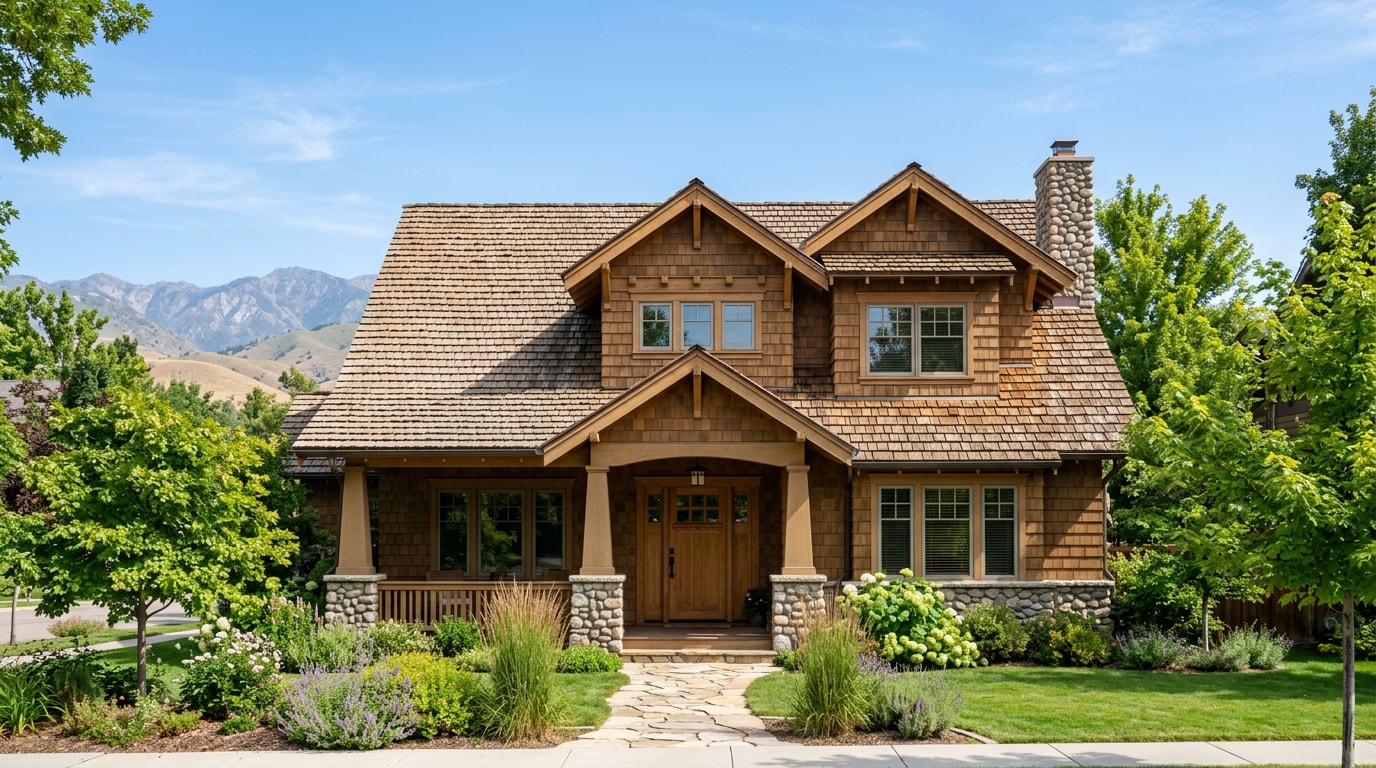
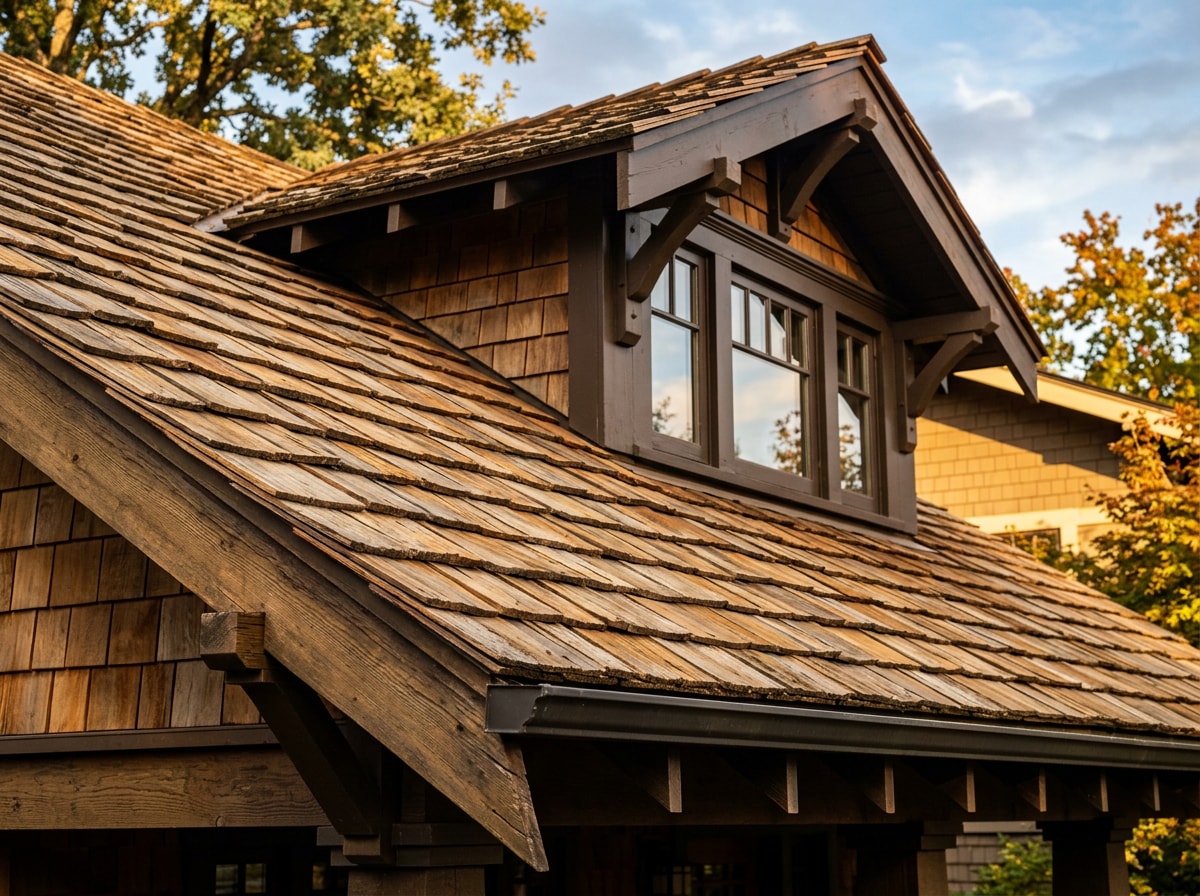
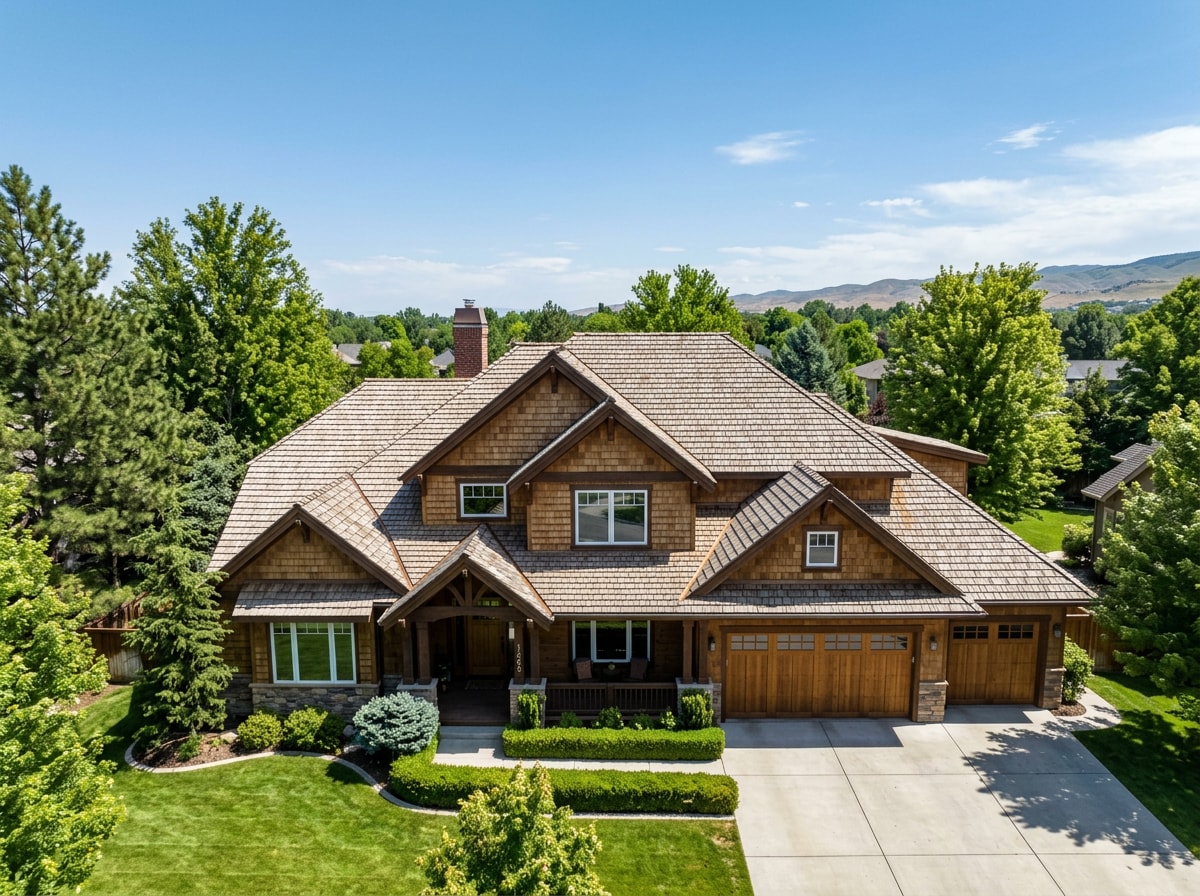
Few roofing materials bring the same warmth as a natural cedar roof. The irregular grain, soft color variation, and dimensional texture give a home genuine character that manufactured shingles struggle to copy.
This look pairs especially well with craftsman bungalows, mountain-modern builds, and classic ranch homes common across the Treasure Valley. For sellers, that curb appeal often translates into a noticeable edge during showings. For owners who just want to enjoy the house, cedar shake simply feels like it belongs here.
Curious how cedar compares to other materials available in the area? Our roofing contractor services page breaks down every system we install, and homeowners weighing metal instead can read our guide to residential metal roofing contractors in Boise for a side-by-side look.
What to Consider Before Choosing Wood Shakes
Cedar shake costs more upfront than asphalt, requires fire-treated shakes in most Boise-area jurisdictions, and can trigger extra scrutiny from HOAs or insurers. It also weighs more than typical shingles, so roof deck capacity matters.
A few practical points worth weighing before you budget:
- Cost: Cedar shakes run notably higher per square than architectural asphalt shingles.
- Fire rating:
Fire-retardant-treated shingles and shakes must be marked to identify the manufactured unit and manufacturer, and labeled to identify the fire classification, the treating company, and an approved testing agency . Untreated shakes typically don't meet local fire-code expectations.
- HOA rules: Some Treasure Valley communities restrict or require approval for wood roofing — check before you budget.
- Roof deck weight: Cedar is heavier than composition shingles, so deck structure sometimes needs evaluation.
- Lifespan: Plan on roughly 25 to 40 years with proper care, and
cedar shakes and shingles can last 50 years or more in ideal conditions , far less if maintenance lapses.
How Cedar Shake Holds Up in Idaho's Climate
Boise's climate puts specific demands on any roofing material, and cedar responds differently than asphalt does. Intense summer UV exposure dries and bleaches wood fibers over time. Hard freeze-thaw cycles each winter stress the shakes' natural expansion and contraction, sometimes leading to splitting if the wood isn't treated and maintained.
Low regional humidity actually works in cedar's favor compared to coastal markets, where constant moisture accelerates rot. Treasure Valley weather trades that moisture risk for UV stress and temperature swings instead. Snow load is rarely extreme here, but wind-driven debris and occasional heavy wet snow can still find weak spots in aging shakes.
Most Boise-area jurisdictions reference the International Residential Code's roof assemblies chapter for fire classification requirements, which is why fire-retardant-treated, Class A-rated shake products are the standard specification rather than untreated cedar.
Common Wood Shake Roofing Problems & When to Repair or Replace
Curling, splitting, or cupped shakes, visible moss growth, and active leaks are the clearest signs a cedar shake roof has reached the end of its serviceable life. As a rule of thumb, isolated damage affecting under 20% of the roof is usually repairable, while widespread wear across multiple areas typically signals it's time to replace.
Boise's UV exposure and dry falls accelerate drying and cracking, while shaded, moisture-trapping areas — north-facing slopes, valleys, under overhanging trees — tend to grow moss faster than the rest of the roof. Thinning, splintered shake faces serve the same warning function that granule loss does on asphalt. Once leaks show up in more than one section, patch repairs usually stop making financial sense, and a full roof replacement becomes the more cost-effective path.
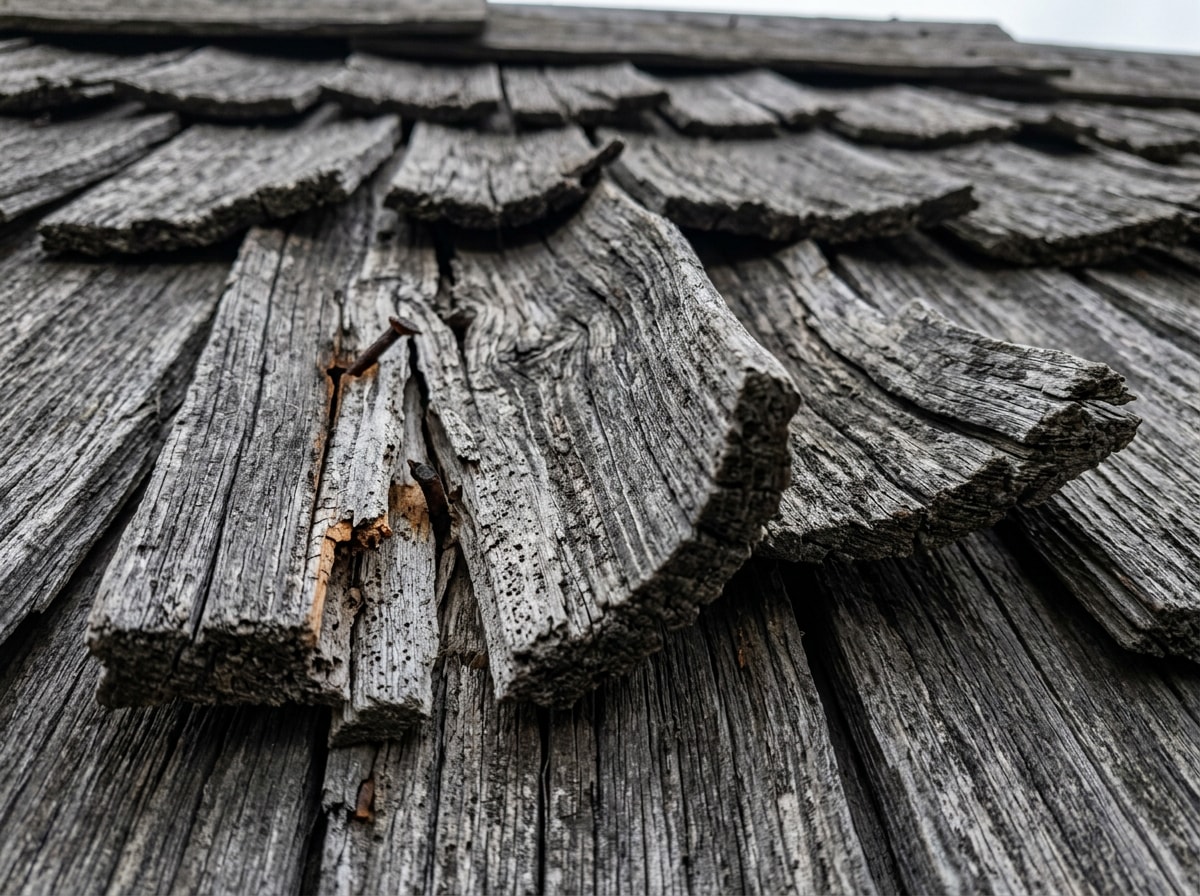
If a storm knocks loose or splits shakes overnight, don't wait on it. Exposed decking and underlayment soak up water fast, and our emergency roof repair team handles exactly this kind of same-day damage control. For smaller, isolated issues, standard roof repair service is usually enough.
Maintenance: What Cedar Asks of You
Cedar shake maintenance is more hands-on than asphalt, but it's manageable with a routine. Annual cleaning to remove debris and moss, sealing every three to five years with a UV-protective treatment, and prompt replacement of cracked or split individual shakes are the core tasks that keep a wood roof performing.
A roof inspection once or twice a year, ideally before winter and after Boise's dry, debris-heavy fall, catches small problems early. Keeping gutters and valleys clear matters more with cedar than with shingles, since trapped moisture against wood accelerates decay. Our gutter cleaning and gutter inspection services pair naturally with cedar roof upkeep for exactly this reason.
Boise Wood Shake Roofing Services & Our Installation Process
Most contractors offering cedar shake roofing in Boise provide new installation, repairs, full tear-off replacement, and ongoing maintenance plans. The installation sequence follows a logical order, though each step looks different than it would for asphalt:
- Free roof inspection to assess deck condition, existing damage, and ventilation.
- Material grading and selection. Cedar shakes are graded by thickness, clear-face percentage, and butt size, which directly affects price and longevity.
- Permitting.
Re-roofing an existing structure requires a building permit in Boise, and Ada County jurisdictions typically verify structural load given cedar's added weight. The City of Boise Building Division's homeowner's guide outlines when permits apply.
- Tear-off and deck prep, which for cedar often includes spaced skip-sheathing or ventilation upgrades rather than standard solid decking.
- Installation, laying shakes with proper exposure and offset patterns for weather resistance.
- Final cleanup and walkthrough before sign-off.
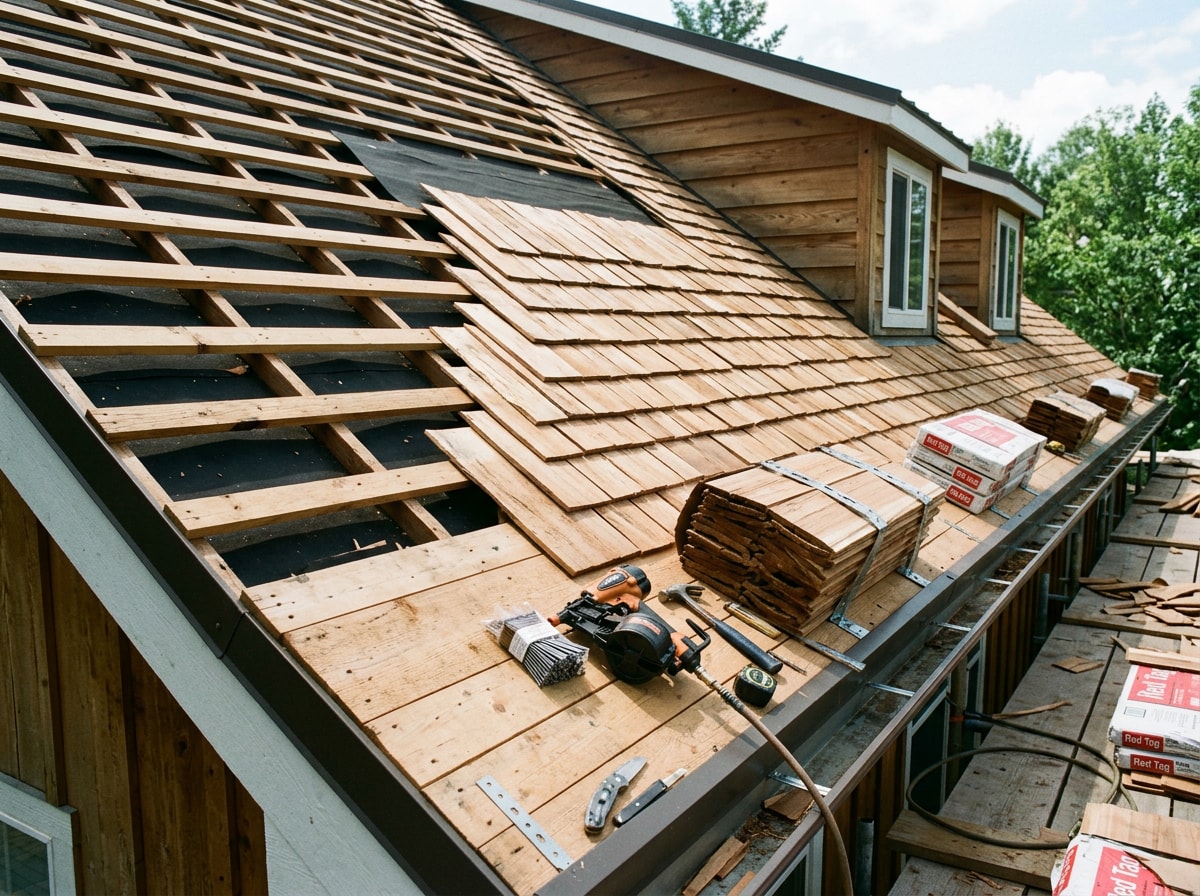
Our roof installation page outlines current availability for wood shake projects in Boise and the surrounding Treasure Valley.
Cedar vs. Other Roofing Options
Cedar shake offers unmatched natural character but requires more maintenance and costs more upfront than asphalt shingle, which remains the budget-friendly default across the Treasure Valley. Metal roofing splits the difference: higher cost than asphalt, lower maintenance than cedar, and excellent longevity, though it won't replicate wood's texture.
| Material | Upfront Cost | Maintenance | Typical Lifespan |
|---|---|---|---|
| Asphalt shingle | Lowest | Minimal | 20-30 years |
| Cedar shake | High | Ongoing (cleaning, sealing, spot repair) | 25-40+ years |
| Metal | Mid-to-high | Low | 40-50+ years |
| Slate/tile | Highest | Low | 50+ years |
Flat or low-slope and specialty materials like slate or tile sit in their own category, usually chosen for architectural style rather than cost efficiency, and they aren't always a practical substitute for cedar's look. For most Boise homeowners comparing roofing materials, the decision comes down to how much ongoing upkeep they're willing to take on in exchange for cedar's appearance.
Is Cedar Shake Right for Your Home?
Cedar shake tends to make sense for homeowners who prioritize natural aesthetics, plan to stay in the home long enough to enjoy it, and are comfortable budgeting for periodic maintenance. If low upkeep and the lowest upfront cost matter more than appearance, asphalt or metal usually fits better.
Ready to find out what cedar shake would cost on your specific roofline? Get a free estimate and we'll walk the roof with you before you commit to a material.
FAQ
How much do cedar shake roofs cost in Boise?
Nationally, cedar shake roofs run about $6 to $12 per square foot installed , and Boise-area projects generally fall in that range once fire-treatment and local labor rates are factored in. Premium clear-grade shakes sit at the top of that range; utility grade sits at the bottom.
How long does a cedar shake roof last?
Expect roughly 25 to 40 years with proper care. In ideal conditions with strong ventilation and consistent maintenance, cedar shakes and shingles can last 50 years or more . Skipping maintenance can cut that lifespan in half.
Are cedar shake roofs fire resistant?
Untreated cedar is not fire resistant. Fire-retardant-treated shakes must be labeled to show their fire classification, the treating company, and an approved testing agency , which is why most Boise-area jurisdictions require treated, Class A-rated shake products rather than raw cedar.
What's the difference between cedar shakes and cedar shingles?
Certigrade rules govern cedar shingles in 16", 18", and 24" lengths, while Certi-Split rules govern shakes, with the top classification for each requiring 100% edge grain, clear face, and no defects . Shakes are thicker and more rugged-looking; shingles are thinner, smoother, and more uniform.
Are cedar shake roofs worth it?
Cedar shake roofs are worth it for homeowners who value natural appearance and don't mind routine maintenance. For those wanting the lowest-upkeep, lowest-cost option, asphalt or metal typically delivers better long-term value.
Who are reputable cedar shake roofers in Boise?
Look for active Idaho contractor registration, proper insurance, and documented experience with cedar shake specifically. Idaho's registration requirements exist to protect public health, safety, and welfare, and give the state a way to remove incompetent or dishonest contractors from practice . You can verify any contractor's status through the Idaho Contractors Board, and check our service area page to confirm coverage for your neighborhood.