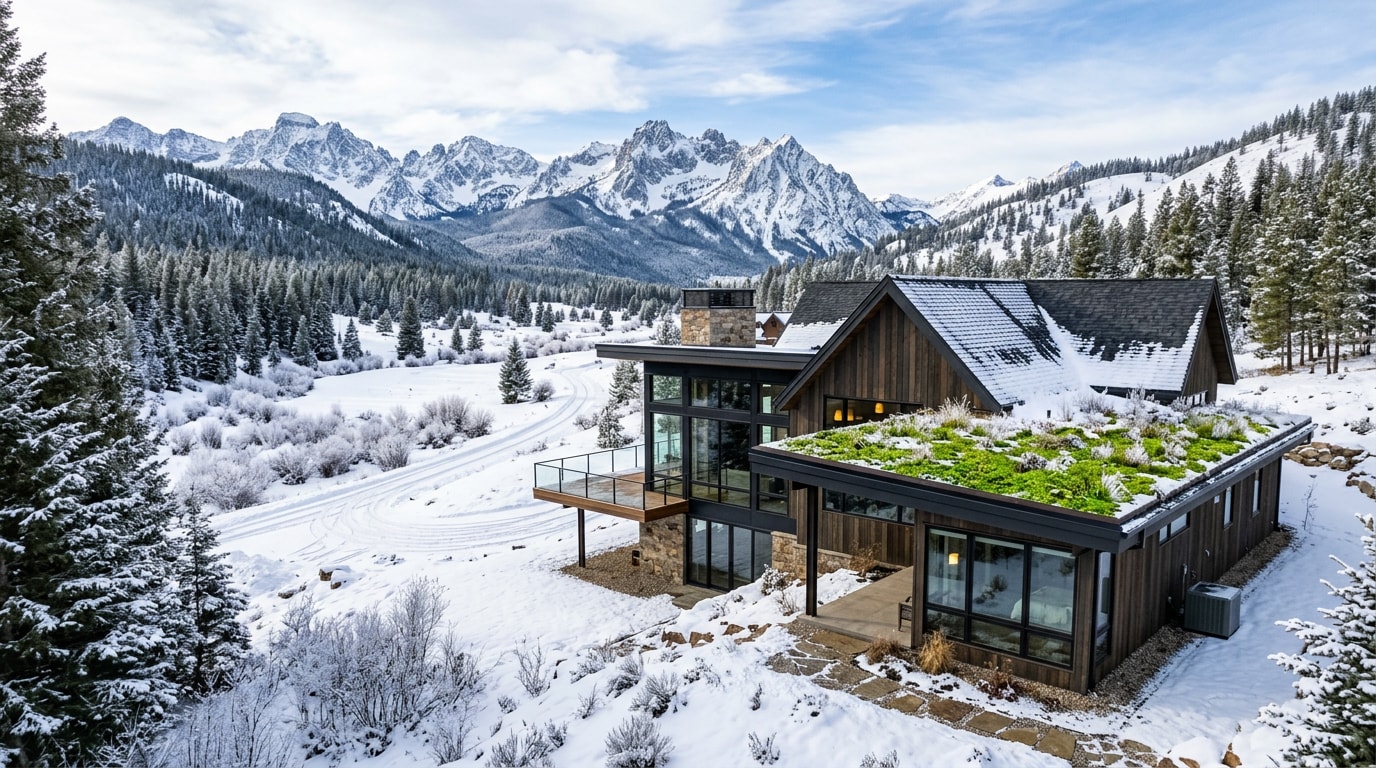
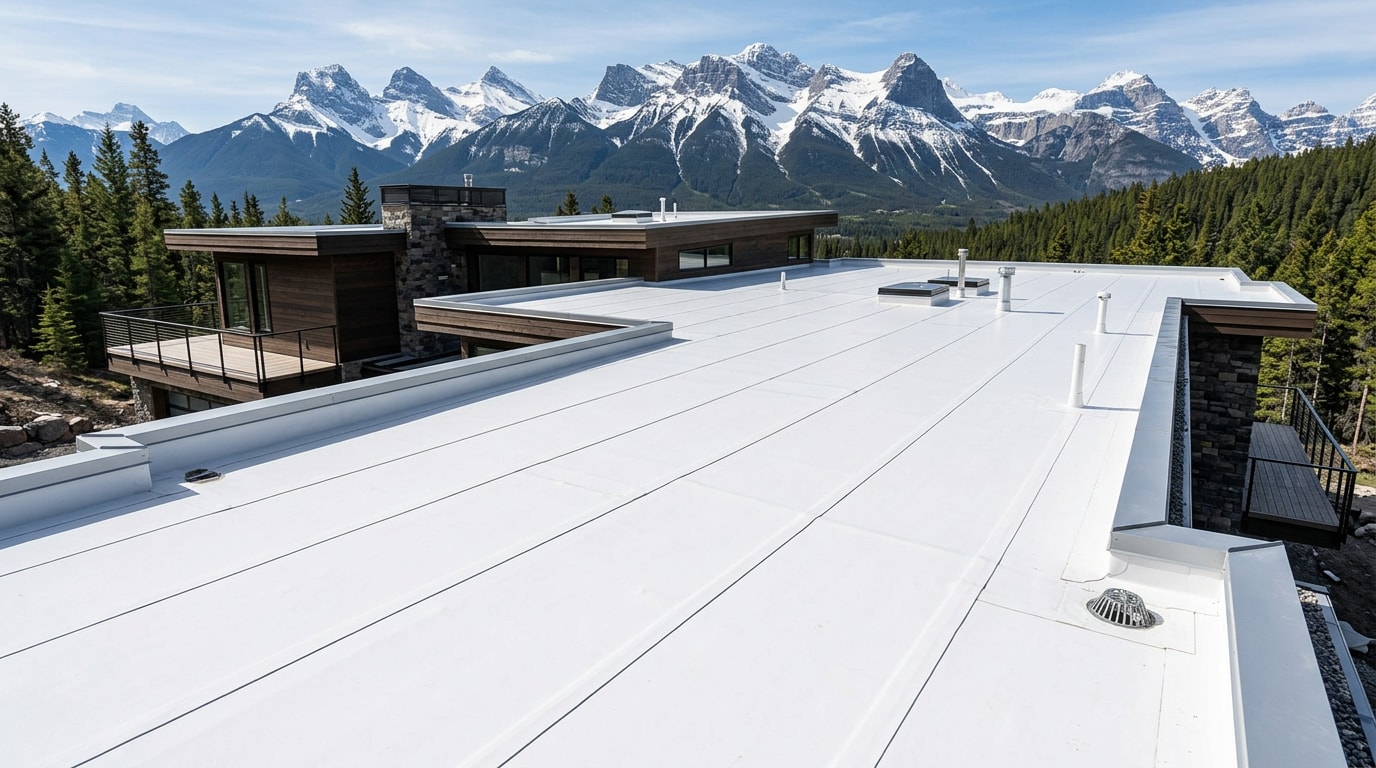
Vinyl roofing in Sun Valley, ID has to clear two hurdles most roof membranes never face together: heavy mountain snow load and wide summer-to-winter temperature swings at nearly 6,000 feet of elevation. A properly installed PVC membrane can handle both, but membrane thickness, installer skill, and install timing matter more here than in a milder climate. Here's what that actually means for your roof.
What Is Vinyl Roofing?
Vinyl roofing, also called PVC roofing, is a synthetic polymer membrane used on flat and low-slope roof sections. It's manufactured from polyvinyl chloride reinforced with polyester, which gives it a flexible, durable surface that behaves very differently from asphalt shingles or standing-seam metal.
In the Wood River Valley, this roofing membrane shows up most often on additions, carports, garages, and modern homes with flat or minimally pitched rooflines, areas where shingles and metal panels don't make sense. "Vinyl roofing" and "PVC roofing" describe the same material family; contractors and manufacturers use both terms for the same product.
If you're weighing vinyl against other systems for a larger project, the roofing contractor services page breaks down how it compares to shingles, metal, and other flat-roof options.
Is Vinyl Roofing a Good Fit for Sun Valley's Climate?
Two local factors drive this decision: snow load and welding temperature.
Blaine County sits at high elevation, and ground snow loads across the Sun Valley area run well above valley-floor Idaho averages. The University of Idaho's Department of Civil Engineering has compiled the state's reference ground and roof snow load research, work that building departments still rely on for design snow loads across Idaho. A PVC membrane itself doesn't carry snow load, the roof deck and framing do, but drainage design and membrane thickness still need to account for ponding as snow melts and refreezes.
The second factor is installation temperature. PVC seams are heat-welded, not glued, and cold-weather installation requires installers who are skilled and familiar with low-temperature welding techniques . In our own installs around Sun Valley, Hailey, and Ketchum, the roofs that hold up longest are the ones scheduled before the first hard freeze, when the membrane is still flexible enough to seat and weld correctly.
None of this rules vinyl out. It just means the contractor's cold-weather welding experience matters as much as the membrane brand. For a property-specific read on whether your roofline is a good candidate, see our Sun Valley, ID service area page or request a roof inspection.
Types of Vinyl Roofing: Panels vs. Membranes
Not all vinyl roofing is the same product. The category splits into two distinct types, rigid panels and heat-welded membranes, and each suits different structures and budgets.
- Rigid PVC panels: Mechanically fastened sheets commonly used on porches, carports, and outbuildings. Easier to install, more budget-friendly upfront, and a good fit for smaller structures that don't need a fully sealed membrane system.
- PVC membrane roofing: Heat-welded at every seam to create one continuous waterproof barrier. This is the better choice for primary flat or low-slope roofs on homes, where drainage and long-term waterproofing matter more than upfront cost.
| Type | Best Use | Install Method | Typical Lifespan | Pros | Cons |
|---|---|---|---|---|---|
| Rigid PVC panels | Porches, carports, outbuildings | Mechanically fastened | 15-20 years | Lower cost, quick install | Seams more exposed, less ideal for full roofs |
| PVC membrane roofing | Flat/low-slope primary roofs | Heat-welded seams | 20-30 years | Fully sealed, excellent waterproofing | Higher install cost, needs trained installers |
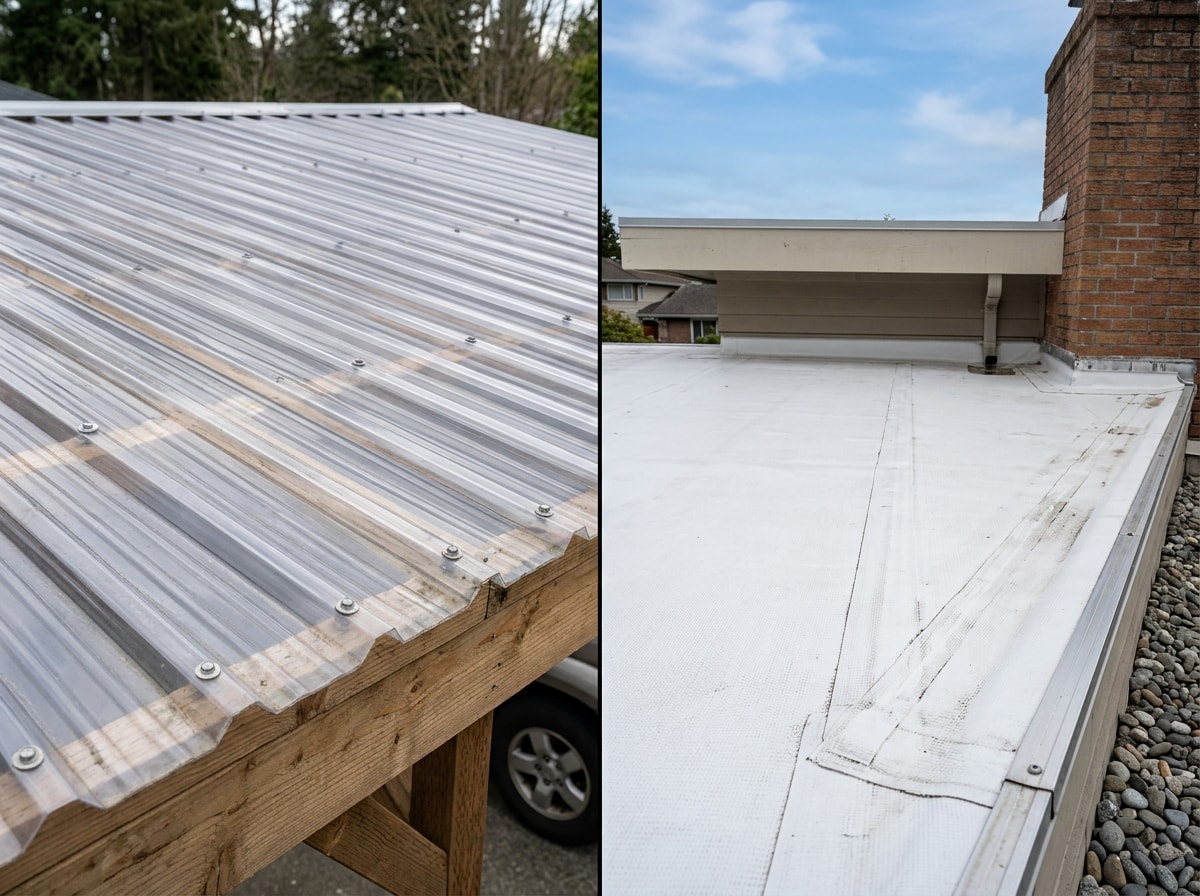
Most homeowners comparing types of vinyl roofing for a primary residence end up looking at membrane systems, while panels tend to fit secondary structures. For new construction or a full tear-off, the roof installation page covers what's typically recommended based on roof slope and structure type.
How Much Does Vinyl Roofing Cost in Sun Valley?
Cost is usually the first question, and the honest answer depends on membrane thickness, installation method, and roof complexity. Installed PVC roofing commonly runs about $7 to $14 per square foot in 2026, compared with $4 to $7 for EPDM and $5 to $8.50 for TPO.
| Cost Factor | Typical Range (per sq. ft., installed) |
|---|---|
| Rigid PVC panels | $4.00 - $7.00 |
| Standard PVC membrane (45-60 mil) | $7.50 - $12.00 |
| Premium/reinforced PVC membrane | $12.00 - $16.00+ |
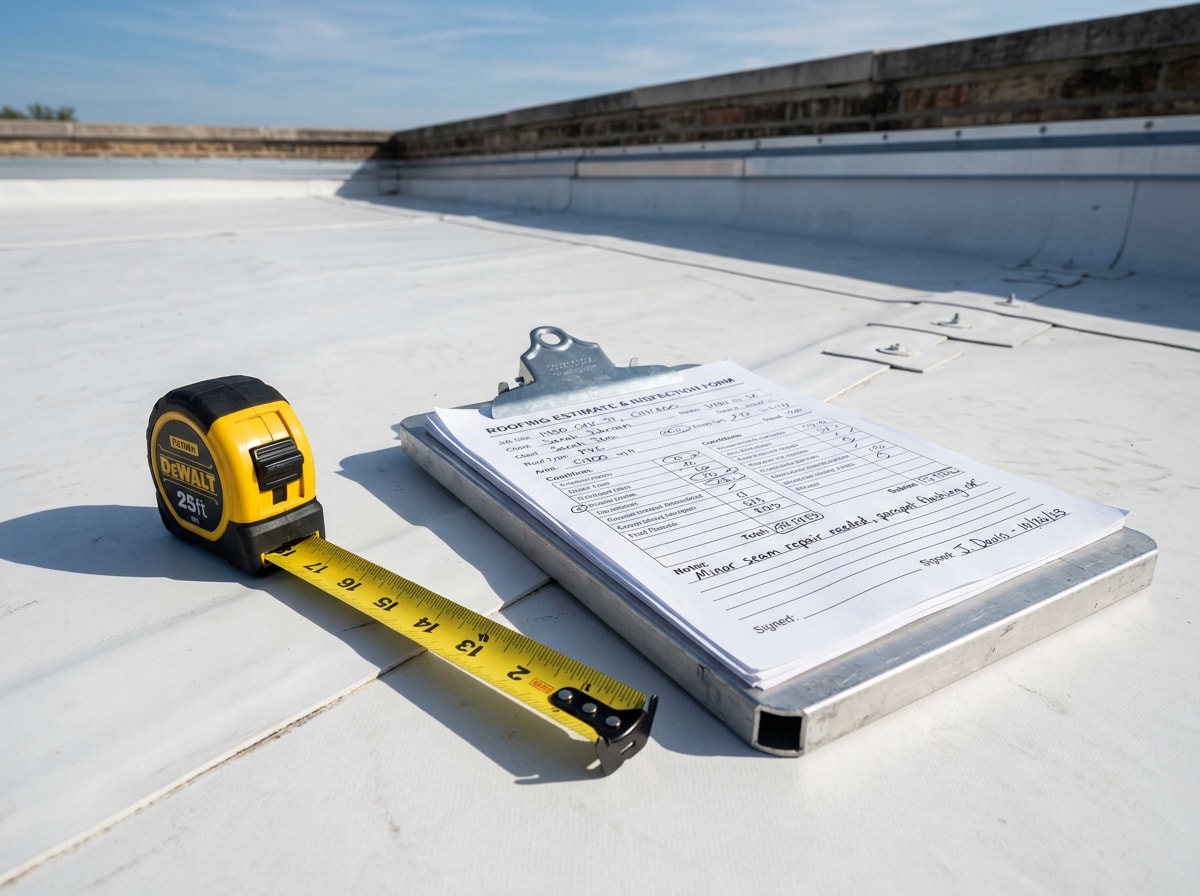
Membrane thickness is the biggest cost driver. Thicker membranes cost more but resist punctures and last longer. Roof size and access matter too: steep pitches, multiple penetrations, and difficult site access all add labor time. PVC typically costs a bit more than TPO, about the same as or a little more than EPDM, and roughly twice as much as asphalt shingles.
That higher upfront number is easier to justify once you factor in a 20-to-30-year service life instead of a 15-to-20-year asphalt replacement cycle. For a number specific to your roof, get a free estimate rather than relying on general averages.
Vinyl Roofing Pros and Cons
Vinyl comes with real advantages and legitimate trade-offs, especially in a climate with heavy winter snow and intense summer sun at elevation.
Benefits:
- Long service life.
A well-maintained vinyl roof can last between 20 and 30 years.
- Reflective, energy-efficient surface.
A cool roof is one that has a high solar reflectance, which keeps the surface and the building beneath it cooler. The U.S. Department of Energy's ENERGY STAR program tracks cool roof performance standards that reflective PVC membranes are built to meet.
- Low routine maintenance. Vinyl doesn't need the regular resealing or coating that some other flat-roof materials require once it's properly installed.
- Chemical and puncture resistance. Heat-welded seams and a tough surface hold up well against debris, foot traffic, and most common chemical exposure.
Trade-offs:
- Higher upfront cost. Vinyl typically carries a higher price tag than asphalt or built-up roofing.
- Cold-weather installation sensitivity.
Cold-weather installation requires skilled installers familiar with low-temperature welding. Timing and installer experience matter more here than in milder climates.
- Smaller contractor pool. Not every roofing crew is trained in proper PVC heat-welding, so vetting experience is worth the extra question.
PVC vs. EPDM for Mountain Roofs
PVC and EPDM are both popular single-ply membrane options, but they behave differently in high-sun environments. EPDM is typically black and absorbs heat, while PVC's reflective surface deflects it. EPDM's black surface absorbs heat rather than reflecting it, making it less energy-efficient in warm climates.
At Sun Valley's elevation, where UV exposure is intense, this shows up in real performance. A flat-roof addition or detached garage finished in PVC membrane will generally run cooler in direct summer sun than the same structure in EPDM, which can mean a more comfortable interior without extra cooling equipment.
This isn't about one material being universally better. EPDM has its own durability strengths and a lower upfront cost. For a deeper dive into EPDM specifically, including local cost and lifespan data, see our guide on EPDM roofing in Sun Valley, ID.
FAQ
What Are the Downsides of PVC Roofing?
The main downsides are higher upfront cost, reduced flexibility in extreme cold, and a smaller pool of contractors trained in proper heat-welding techniques. None of these are dealbreakers, but installer experience matters more with PVC than with simpler roofing systems.
How Much Does PVC Roofing Cost Per Square Foot?
Expect roughly $4 to $7 per square foot for rigid panels on a small structure, and $7.50 to $16 per square foot for a full membrane system, depending on thickness and roof complexity. Installed PVC roofing runs about $7 to $14 per square foot in 2026 for most residential membrane projects.
How Long Does a Vinyl Roof Last in Idaho?
A well-maintained vinyl roof can last between 20 and 30 years. Idaho's snow load, freeze-thaw cycles, and high-elevation UV exposure can affect that range depending on installation quality and roof slope. University of Idaho research on ground and roof snow loads is the reference most Blaine County building departments use when reviewing roof design.
Who Makes PVC Roof Membranes?
Several established manufacturers produce PVC roofing membranes, including Sika Sarnafil, GAF, Carlisle SynTec, and Johns Manville. These are material brands, not installation companies, and product availability varies by region and contractor relationships.
Is Vinyl Roofing Good for the Environment?
It's a mixed picture. The long lifespan and reflective surface reduce energy use over the life of the roof, but PVC manufacturing has real environmental considerations. The EPA has classified vinyl chloride, a key input in PVC production, as a known human carcinogen , which is why PVC production facilities are regulated under federal air emissions standards. The finished roofing product itself is inert once installed.
Is PVC Roofing Good for Ponding Water?
Yes, generally. Heat-welded seams create a continuous waterproof barrier that handles standing water better than many mechanically fastened systems, which makes PVC a solid choice for flat roofs prone to poor drainage or ponding after heavy snowmelt.
Ready to find out what vinyl roofing would cost on your specific roofline? Contact us for a free estimate, or visit our homepage to see the full range of roofing and siding services we offer across the Wood River Valley.