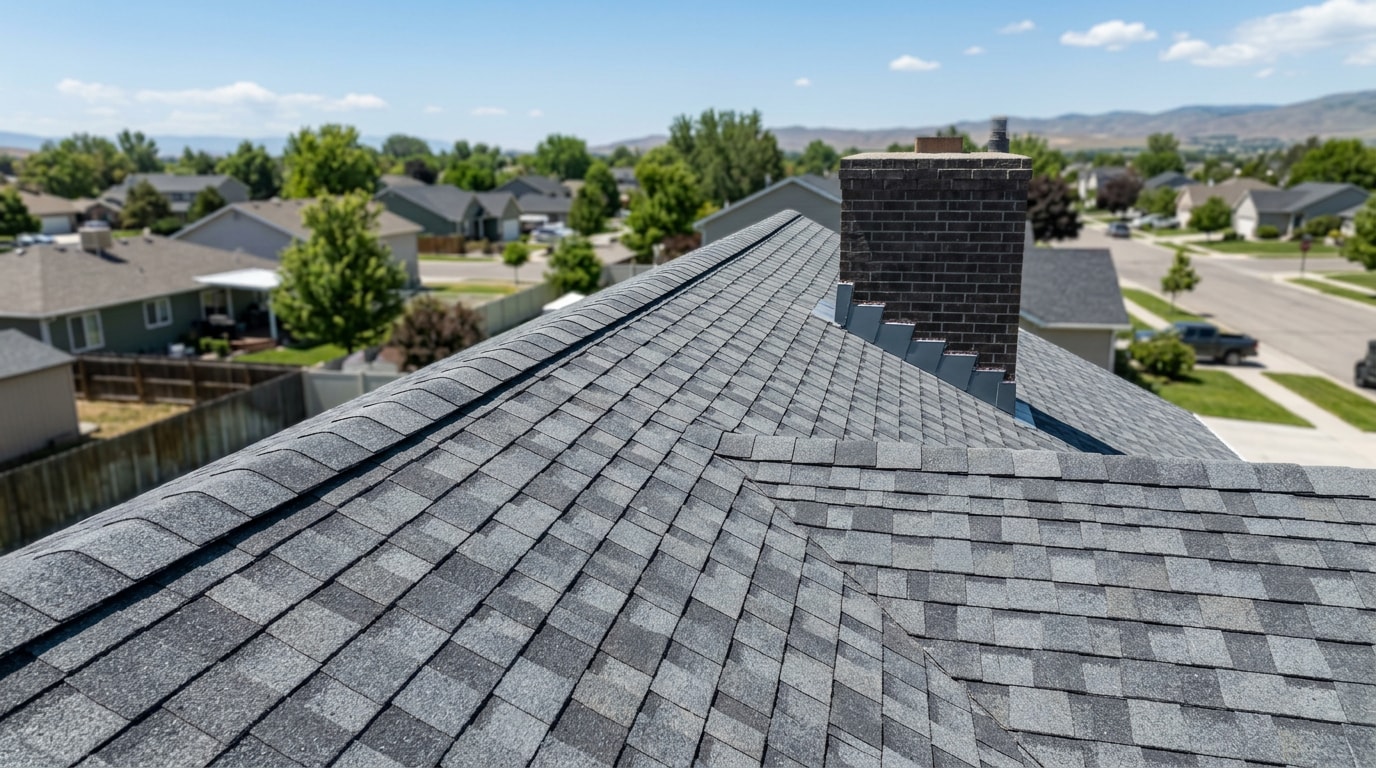
Knowing how to install architectural shingles in Nampa, ID means more than nailing shingles in rows. The sequence of deck prep, underlayment, flashing, and nailing pattern determines whether a roof lasts 15 years or 30. Our crews at 208 Roofing Experts see the same handful of install mistakes on almost every pre-sale inspection, and most of them trace back to one skipped step below.
This guide covers the full installation sequence, how to choose between shingle types, and what Nampa's freeze-thaw winters and dry summers do to an asphalt roof over time.
Tools and Materials You'll Need
- Architectural (laminate) shingles, starter strip, and ridge cap shingles
- Synthetic or felt underlayment, plus self-adhered ice-and-water barrier
- Drip edge, step flashing, valley flashing, and pipe boots
- Roofing nail gun or hammer, 11- or 12-gauge roofing nails
- Chalk line, utility knife, tin snips, tape measure
- Ladder, harness, and fall-protection gear
How to Install Architectural Shingles: The 7-Step Process
A correct architectural shingle install follows a fixed order. Skipping or reordering a step is where most warranty claims and leaks start.
- Prep the deck. Remove old roofing down to solid sheathing. Replace any soft, delaminated, or water-stained plywood before anything else goes down.
- Install drip edge. Run drip edge along the eaves first, then the rakes, overlapping each section by about an inch to keep water moving into the gutters instead of behind the fascia.
- Lay underlayment and ice-and-water barrier. Roll synthetic or felt underlayment from the bottom up, overlapping each course. Add self-adhered ice-and-water membrane in valleys, around penetrations, and along the eaves, this is the layer that protects against Nampa's freeze-thaw cycles.
- Set the starter course. A dedicated starter strip along the eaves seals the first row of field shingles and resists wind uplift at the roof's most exposed edge.
- Nail the field shingles. Work bottom to top, staggering joints between courses so cutouts never line up. Place four to six nails per shingle inside the manufacturer's nailing zone, never above or below it.
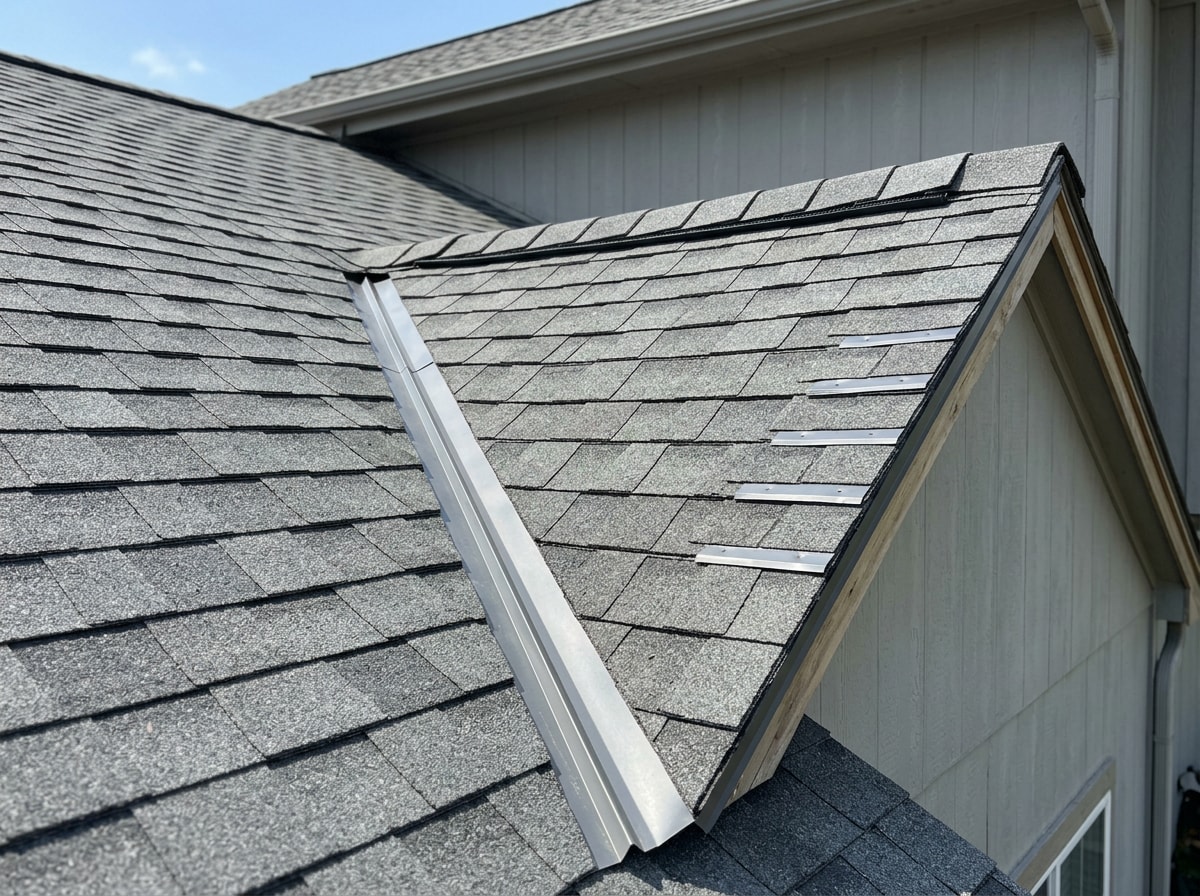
- Flash the details. Step flashing at walls, valley flashing where planes meet, and pipe boots at every penetration. Most roof leaks start at flashing, not in the field of the roof.
- Finish with ridge cap and ventilation. Ridge vents paired with soffit intake balance attic airflow, which controls heat and moisture from the inside and extends shingle life.
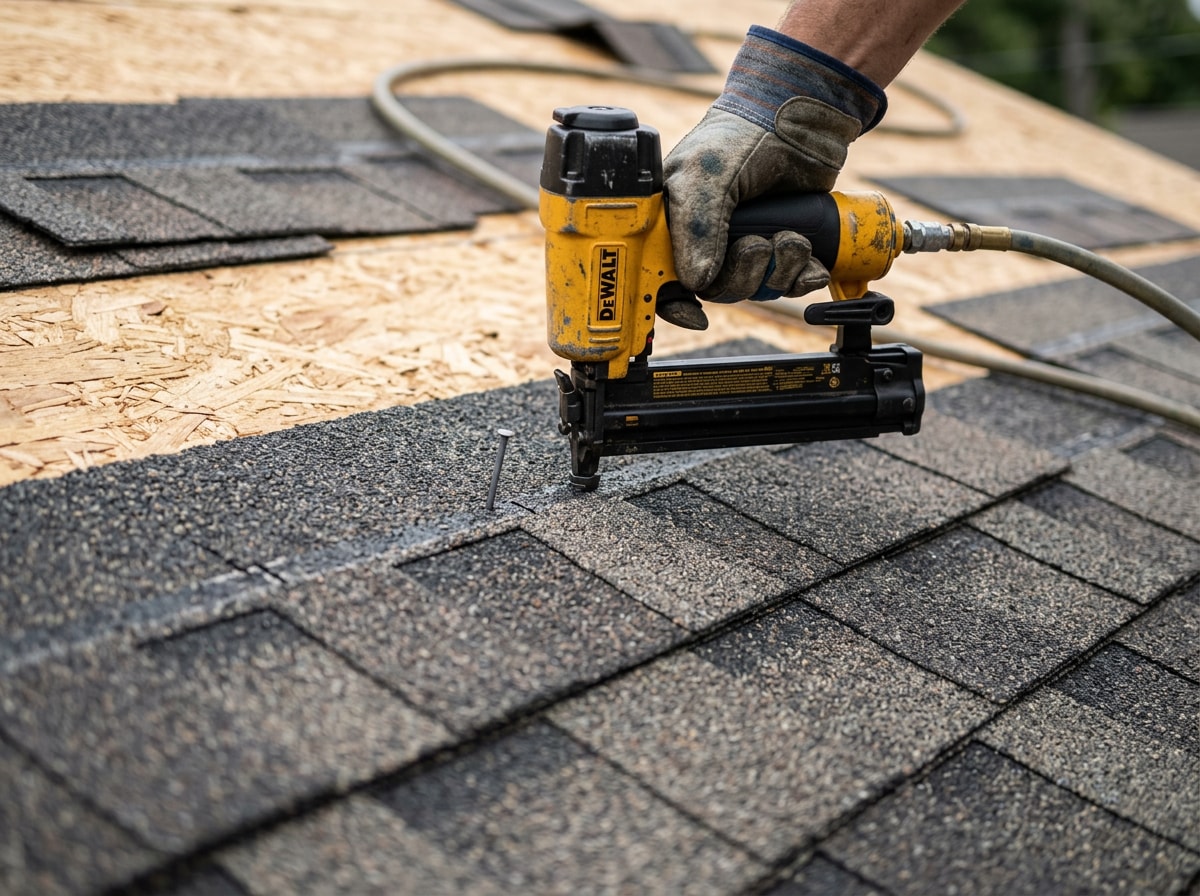
Getting the nail placement right matters more than most homeowners assume. GAF's Timberline installation instructions call for nailing shingles approximately 6-7/8 inches from the bottom of the shingle, inside the marked nailing area, with nails that must not be exposed. Every major manufacturer publishes a similar diagram, and a roof installed a half-inch outside that zone can fail a wind warranty even if nothing looks wrong from the ground. Trade groups back this up: a joint publication from the Asphalt Roofing Manufacturers Association and the National Roofing Contractors Association is built to guide on-site evaluation of asphalt shingle roof applications , which tells you how seriously the industry treats this one detail.
If you'd rather have a licensed crew handle the sequence above, our roof installation team follows this exact process on every Nampa re-roof.
Architectural vs. 3-Tab vs. Designer Shingles
Shingle choice changes the nailing pattern, exposure, and wind performance, so it's worth settling before you buy material.
| Shingle Type | Construction | Typical Lifespan | Best For |
|---|---|---|---|
| 3-Tab | Single flat layer, uniform cutouts | 15-20 years | Budget re-roofs, rentals |
| Architectural (laminate) | Two or more fused layers, dimensional profile | 25-30 years | Most Nampa homes |
| Designer | Thicker laminate, deep shadow lines mimicking slate or shake | 30+ years | Premium curb appeal |
3-tab shingles are the most affordable option but carry the shortest lifespan and a lighter wind rating, since there's only one layer holding the shingle to the deck.
Architectural shingles use layered construction for added mass, which is why they dominate re-roofs in the Treasure Valley. They mimic wood shake or slate without the weight or cost of either.
Designer shingles sit above standard architectural lines with deeper shadow lines and thicker laminate. They cost more, but homeowners chasing a high-end look without real slate often land here.
Wind ratings vary by product line rather than by a single number, so always check the shingle's actual ASTM classification before buying. The asphalt shingles are installed with the number of fasteners used in the manufacturer's wind-speed testing, but never fewer than four fasteners per strip shingle , regardless of how the product is marketed.
Why Climate Makes Installation Quality the Deciding Factor in Nampa
Nampa's summer UV exposure accelerates granule loss and asphalt oxidation over time. Wide daily temperature swings make shingles expand and contract, which gradually works at the seal strips.
Winter freeze-thaw cycles push moisture into any crack that's already there, and installing in cold weather changes the job: sealant strips need warmth from the sun to bond, so a crew working in January needs to account for that instead of assuming the seal activates on day one. This is the detail we flag most often during post-storm inspections, a roof that looks fine from the driveway but was sealed in cold weather without hand-sealing the tabs.
Permits and Code in Nampa
Full tear-offs and overlays on an existing roof require a city permit in Nampa, not just new construction. Permits are required before performing any new construction, building addition, alteration, or repair of existing buildings and structures , and the inspection confirms the installer followed code, not just that the roof looks finished. The city's Building Department exists to protect public health, safety, and welfare through enforcement of State of Idaho adopted building codes , which includes the nailing and wind-resistance standards covered above.
Ask any contractor bidding your job whether the permit fee is already built into the quote, and confirm they're pulling it, not leaving it on you. For homes in neighboring communities, our Nampa, ID service area page covers what local crews typically run into on inspection day.
Repair or Replace? A Practical Decision Checklist
Not every damaged roof needs a full tear-off. Run through this before committing to either path:
- Age: Past 15-20 years for 3-tab, or approaching 25-30 for architectural shingles?
- Damage spread: More than 25-30% of the roof surface affected?
- Granule loss: Granules collecting in gutters, exposing bare asphalt mat?
- Decking condition: Plywood underneath soft, sagging, or stained?
- Repair history: Patched more than once or twice already?
Two or more "yes" answers usually tip the math toward full replacement over continued patching. A professional roof inspection will confirm which side of the line your roof falls on, and if replacement makes sense, our roof replacement crews can walk you through material options. Get a free estimate before deciding either way.
Seasonal Maintenance After Installation
A new architectural shingle roof still needs seasonal attention.
- Spring: Check for wind and hail damage after storms pass through.
- Summer: Watch for curling or brittle tabs as UV exposure peaks.
- Fall: Clear gutters and debris before the first freeze, gutter cleaning before winter prevents ice damming at the eaves.
- Winter: Watch valleys and eaves for ice-dam buildup after heavy snow.
If part of your property has a low-slope section, the install details differ. Our flat roofing replacement guide for Nampa covers what changes when the pitch drops below the asphalt shingle minimum.
Pros and Cons of Asphalt Shingle Roofing
Pros:
- Lower material and labor cost than metal or tile
- Dozens of colors and profiles available
- Easier, cheaper spot repairs after storm damage
Cons:
- Shorter lifespan than metal or tile
- More vulnerable to wind and hail in severe storms
- Needs periodic inspection and minor upkeep to hit its full lifespan
Glossary of Roofing Terms
- Architectural shingle: Multi-layer, laminated asphalt shingle with a dimensional profile.
- 3-tab shingle: Flat, single-layer shingle with three tab cutouts.
- Underlayment: Protective layer between the deck and the shingles.
- Starter strip: First course that seals the eave edge against wind.
- Flashing: Metal sealing joints, valleys, and penetrations.
- Ridge cap: Shingles installed along the roof's peak.
- Nailing zone: Manufacturer-specified band where nails must be placed.
FAQ
How should architectural shingles be installed?
Prep the deck, install drip edge, add underlayment and ice-and-water barrier, lay a starter course, nail field shingles with proper offset, flash all penetrations and valleys, then finish with ridge cap shingles.
How many nails go in an architectural shingle?
Four nails per shingle in standard wind zones, six in high-wind areas. Code requires at least four fasteners per strip shingle regardless of the manufacturer's rated wind speed, so this is a floor, not a suggestion.
What is the 25% rule for roofing?
It's a common industry and insurance threshold: once damage covers roughly a quarter or more of a roof slope, a patch repair stops being cost-effective and a full replacement is usually recommended. The exact percentage that triggers a code-required replacement varies by jurisdiction, so confirm the current standard with Nampa's Building Department before assuming either way.
Can I install architectural shingles over existing 3-tab shingles?
Sometimes, depending on local code and how much damage the existing layer already has. Downsides include added roof weight, reduced lifespan of the new layer, and possible manufacturer warranty exclusions, so a full tear-off is usually the safer long-term call.
Can I install asphalt shingles myself?
You can, but the risk is real: steep-slope falls, improper nailing, and voided manufacturer warranties are the most common DIY outcomes we see get called in as repairs later. For most homeowners, a licensed Nampa roofing contractor is safer and cheaper in the long run than a redo.
Do I need a permit to reroof in Nampa?
Yes. Nampa requires a permit for reroofing work, including overlays and full tear-offs, not just new construction. Confirm your contractor is pulling the permit and that the fee is included in your quote.
How long does a typical architectural shingle install take?
Most single-family homes in Nampa take one to three days for a full tear-off and reroof, weather and roof complexity permitting. Steep pitches, multiple valleys, or extensive flashing work can push that timeline longer.
Ready to get it done right the first time? Request a free roofing estimate from our Nampa-based crew, or browse our full roofing contractor services to see what else we cover.